
You are not imagining it
Muscle mass declines from your thirties, metabolic rate drifts down with it, and hormones shift. The plan that worked at 30 genuinely does not work at 55. That is physiology, not a willpower failure.
Why us
Automate My Fitness
The clothes at the back of the wardrobe still do not fit. You feel flat by mid-afternoon. And every expert gives you a different answer on what to eat, when to train, and whether to take a GLP-1. We start somewhere else entirely: we measure what your body is actually doing, then build one plan around it.
Coached by Darren Pyefinch, Online Coach of the Year 2025 · Milton Keynes & online UK
The real problem
Most people we meet over 40 are working harder than they ever have and getting less back. There are four reasons for that, and none of them is willpower.
Muscle mass declines from your thirties, metabolic rate drifts down with it, and hormones shift. The plan that worked at 30 genuinely does not work at 55. That is physiology, not a willpower failure.
Every aggressive diet-and-regain cycle tends to cost lean tissue and return fat. That is why each attempt feels tougher than the last, and why the answer is rarely "eat even less".
Most plans are designed for younger bodies with different hormones and different recovery. Applied at 56 they produce exhaustion and disappointment.
You cannot fix what you have not measured. Without body composition, metabolic rate and hormone markers, every plan is a guess — which is exactly why the advice you get contradicts itself.
“I will run through walls for you.”
It means your problem becomes my problem. If the plan is not working, I do not tell you to try harder — I go back to your data and change it. You get a straight answer, even when the straight answer is not what you hoped for, and you are never left to work it out on your own.
Gyms and personal trainers
Most gyms and PTs are built for people under 35. The sign-up is warm. The follow-up is quiet. If that sounds familiar, here is how we are different.
Typical gym / PT
They sign you up, then stop talking to you
Automate My Fitness
You work with us as an individual. Weekly check-ins, real answers, and you are never left to figure it out alone. You are valued — not a membership number.
Typical gym / PT
Most gyms train under-35s — who already have plenty of places to go
Automate My Fitness
We only coach people over 35. That is the whole practice. Your hormones, recovery, and life stage are the brief — not an afterthought.
Typical gym / PT
A generic programme and a scale
Automate My Fitness
We test first: Body MOT, body composition, and bespoke blood-sugar insight where it matters. Then you get a food plan, an exercise plan, and honest advice on alcohol, supplements and lifestyle — built for your numbers, not a template.
Typical gym / PT
An ongoing contract that never ends
Automate My Fitness
You are paying for an outcome — a measured plan and coaching toward a clear goal — not a never-ending gym membership that quietly drains the account.
Case studies
Illustrative examples. John and Sue are illustrative examples, not real clients. They show the kind of situation we see most often and how the process works. Individual results vary. Coaching supports — it does not replace — advice from your GP.
John played football into his forties and never had to think about his weight. Fifteen years on he is two stone heavier, his last blood test came back pre-diabetic, and every piece of advice he gets contradicts the last one.
“I used to be the fittest bloke in the room. Now I get out of breath on the stairs and my doctor is talking about diabetes. I have read so much conflicting stuff that I have stopped trusting any of it.”
Low carb, low fat, Mediterranean, intermittent fasting, cut the bread, do not cut the bread. John has been told all of it — often by people who are equally confident and completely contradictory. So he starts something, doubts it within a fortnight, and stops.
His instinct is to go hard, the way he did as a player. But he is training on a stressed, inflamed system, so he ends up sore, exhausted, sleeping badly, and no lighter. He concludes his metabolism is broken rather than that the dose and timing are wrong.
Half the internet says Mounjaro is the answer to pre-diabetes; the other half says it is a shortcut that costs you muscle. Nobody has told John what it would actually do to his body composition, or how he would keep the result if he ever came off it.
His only feedback is the bathroom scale and an annual blood test. He has no idea whether he is losing fat or muscle, whether his metabolic rate has dropped, or what his stress hormones are doing — so he cannot tell a working plan from a failing one.
A meal plan built around his actual metabolic rate and protein needs — enough to protect muscle while fat comes down. No banned-food lists, no weighing everything, and it survives client lunches and a Friday pint.
We started below what his ego wanted, prioritised strength to defend muscle, and added intensity only once sleep and recovery markers could handle it. That is when his old fitness started coming back.
We laid out what the medication does and does not do, what it tends to cost in muscle without resistance training and adequate protein, and what happens after. The prescribing decision stays between John and his GP — but he makes it with real numbers, and if he does use one we coach alongside it to protect muscle.
Every week we review the data together and change one thing. Every four weeks we remeasure on the same kit, so progress is a fact rather than a feeling.
The goal is not just a smaller number on the scale. It is fat down, muscle protected, energy back, and markers moving in the direction his GP wants to see.
Sue has done Slimming World twice, tried a GLP-1 for four months, and read everything going on menopause and weight. She has lost and regained the same stone repeatedly, and no longer knows whose advice to follow.
“I am doing more than I have ever done and getting less back than I ever have. My clothes do not fit, I feel flat by three in the afternoon, and every expert tells me something different.”
The approach that worked in her thirties now does nothing. Weight has redistributed around her middle, sleep is broken, and she has been told this is simply menopause and something to accept.
It worked while she was in the room and unravelled when she left, because it never addressed why her body was holding on. Each regain chipped away at her confidence and, quietly, at her muscle.
The medication worked while she took it. Nobody built the eating and strength habits alongside it, so when she stopped there was nothing underneath — and she suspects she came back with less muscle than she started with.
The afternoon crash, the low mood, the sense of being a passenger in her own body — these get waved away as hormones. They are rarely measured, so they are never actually addressed.
Protein raised to protect and rebuild muscle, meals structured to steady her energy through the afternoon, and calories set from her measured rate rather than a generic number off an app.
Resistance training two to three times a week — the single most useful thing for muscle, bone and body shape after menopause. Short, progressive sessions she can actually keep doing.
If Sue and her GP choose a GLP-1, we coach around it so the loss comes from fat rather than muscle, and so there is a real plan for coming off. If she does not, the plan works without it. Either way the decision is informed.
A weekly check-in to interpret what the numbers are doing, adjust, and keep her out of the all-or-nothing spiral that ended every previous attempt.
Sue is not chasing a number she held at 35. She wants her clothes to fit, her energy to last the day, and to stop starting over every January.
Step one
Conflicting advice exists because almost nobody measures anything first. Your Body MOT in Milton Keynes gives us the numbers that make the plan obvious.
How much fat you are actually carrying and where — not a BMI number that cannot tell fat from muscle.
The tissue that protects your metabolism and independence. Most over-40s losing weight are quietly losing this too.
A baseline that matters increasingly with age, and especially after menopause. Rarely measured by any diet plan.
Your stress response — much more accurate than a gym scan or home scales, which do not show this at all.
Much more accurate than a gym scan or home scales, which do not show inflammation at all.
What you actually burn at rest. Set calories without this and you are guessing — usually far too low.
Inflammation and HPA-axis readings are much more accurate than a typical gym scan or home scales. They help shape your coaching plan. Individual results vary.
Then
Built from your measured metabolic rate and protein needs — not a generic calorie target. Meals for the week with the numbers already worked out, so eating stops being a daily decision.
Dosed to what your body can currently recover from, with strength work protecting the muscle most diets quietly strip away. Short enough to fit a real week.
Every week we look at what the data is doing and change one thing. Every four weeks we remeasure on the same kit, so you can see whether fat is down and muscle is holding.
Real clients
John and Sue above are examples. These are real Automate My Fitness clients, shared with their permission.
“Working with Darren, I lost 8 kg by finally understanding what my body was doing — not just eating less and hoping for the best.”
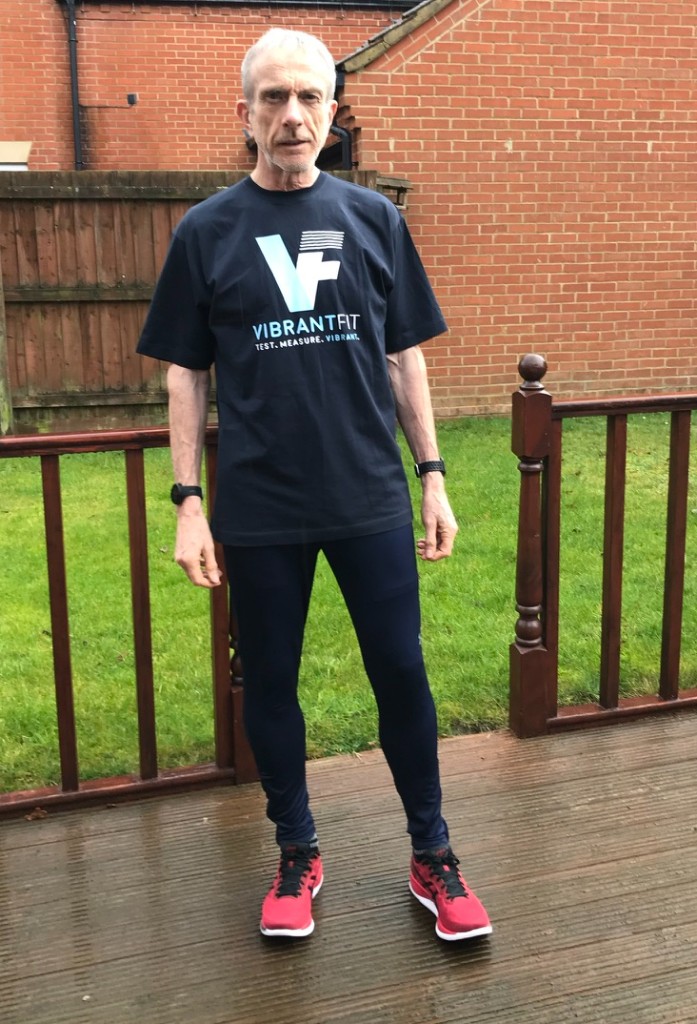 −3 stone
“I lost three stone and went from struggling with my weight to finishing the London Marathon as a good-for-age runner. Understanding my body changed everything.”
App Pro
Book a Body MOT to find out what your body is actually doing, then run the plan in the app with weekly coaching from Darren.
Download free → open Premium Coaching or Settings → Access → subscribe with Apple or Google.
FAQ
Over-40s in the UK who are stuck with weight, energy or clothes that no longer fit — especially after gyms and generic PTs stopped working. We measure first with a Body MOT, then coach with a bespoke food and training plan.
Most gyms sell access and forget you between visits. We start with body composition and metabolic data (Body MOT), build a bespoke plan for your goals, and keep you accountable in the Automate My Fitness app between weekly check-ins.
Yes. Many clients combine coaching with GLP-1 support. We focus on protein, muscle retention, training and habits so results last — alongside advice from your GP or prescribing clinician.
Body MOTs and in-person sessions are at Unit 32 Carters Yard, Kiln Lane, Milton Keynes, MK11 3HL. Coaching also runs online across the UK via the app and weekly calls. Call 01908 973728 or email support@automatemyfitness.com to ask what fits.